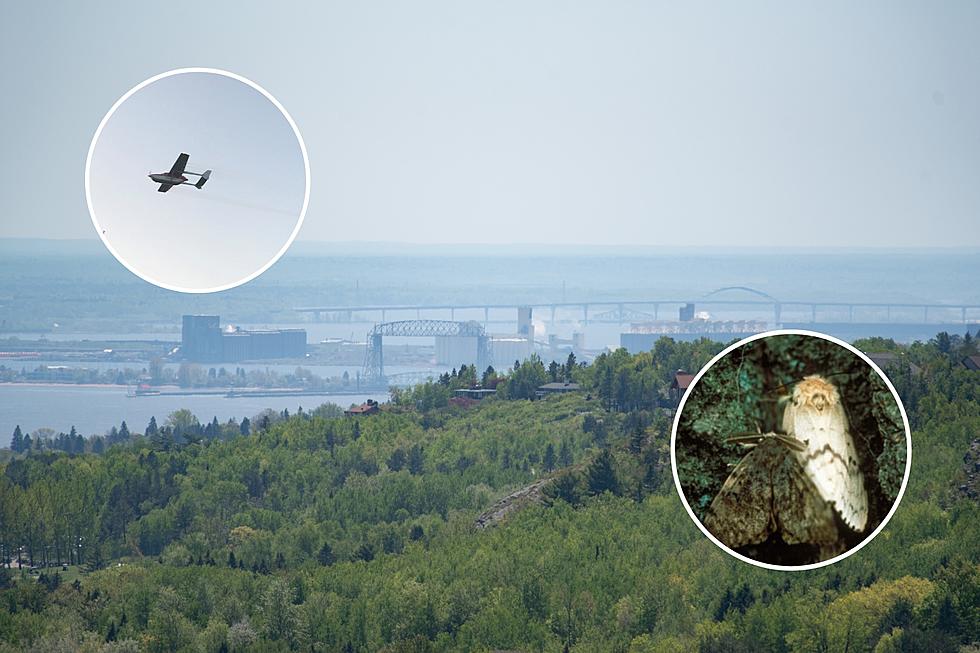

Don’t Be Alarmed! Low-Flying Planes Will Buzz Around Northland Communities Mid-July
Here's a little heads up for you - You'll probably see some low-flying yellow planes buzzing around parts of Northern Minnesota later this month, likely in the early morning hours.
Almost every summer, this happens around parts of Northern Minnesota, and so you don't get caught off guard, I wanted to give you a little forewarning, so you don't end up getting woken up thinking "What the heck is going on?!"
As was shared by officials from Carlton County earlier today (July 7), the Minnesota Department of Agriculture is getting ready to conduct its treatment campaign for spongy moth mid-July in areas around St. Louis, Carlton, Aitkin, Itasca, and Pine Counties.
Here's what you need to know, including the specific areas they plan to treat this year and when to expect flights for this.
What are spongy moths? Why are they treating for them?
The Minnesota Department of Agriculture (MDA) works with the United States Department of Agriculture Forest Service to manage the destructive spongy moth, formerly known as a gypsy moth.
They've been observed in 8 Minnesota counties (shown in green on the map), with management efforts underway to stop their spread.

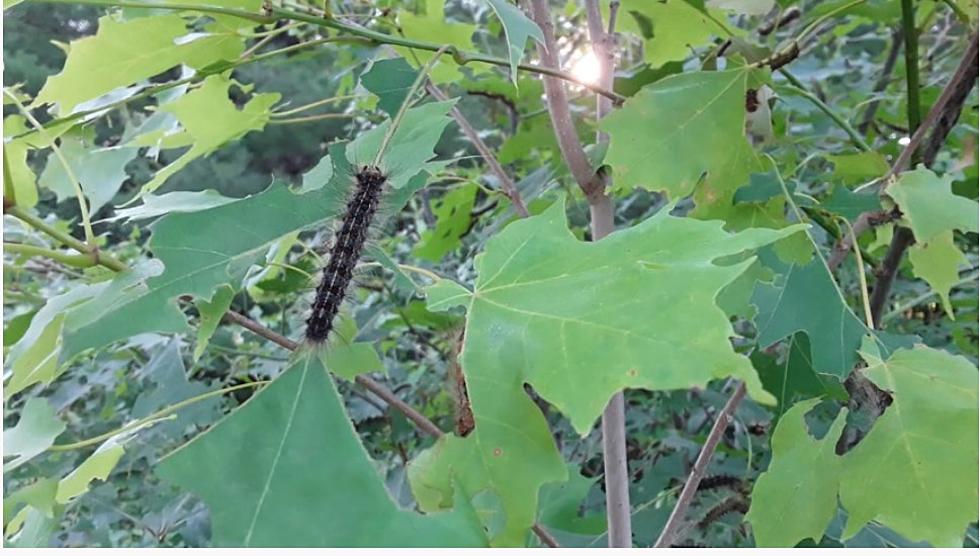
The caterpillars of the spongy moth could cause devastating consequences across the region if left unchecked.
As I explained in an article a few years ago, allowing these invasive creatures to continue to grow in population would lead to widespread effects that could be harmful to both trees and people.
Large numbers of trees and shrubs could end up dying from the caterpillars eating all of the leaves and overstressing them to the point of dying.
READ MORE: Odd Lake Superior ship malfunction causes a ruckus in Duluth
In addition, if left unchecked, the droppings from high populations could lead to water quality issues, and as they shed their bristly skin throughout late spring and early summer, it could cause a variety of human health issues like respiratory problems and eye/skin irritation.
The consequences the MDA lays out for an unchecked spongy moth sound pretty bad. To avoid that, they're conducting treatments in the following areas.
When and where is the MDA treating for spongy moth this year?
According to the MDA, the plan is to conduct treatment operations July 16-22, but that is dependent on weather.
Planes fly about 100-200 feet above treetops, and the MDA says they may be loud. They often conduct these treatment operations in the morning because wind and weather conditions are more favorable. They could start as early as 6:30 am, continuing throughout the day.

The pheromone-based compound SPLAT GM-O used for management is an EPA-certified organic, nontoxic, and biodegradable formula that is made with food-grade materials. The MDA says it is not harmful to humans, animals, fish, birds, and other insects like honeybees.
The compound is designed to confuse and disrupt the moths during mating to prevent population growth.
The MDA says any of this compound that might be left behind on buildings or vehicles (or that people or pets come into contact with) is not harmful, and can be washed off with soap or mild detergent and hot water.
The areas identified by the MDA for treatment this year include 24 different locations around Aitkin, Carlton, Itasca, Pine, and St. Louis counties, identified in teal in the map below.

They include areas near Barnum, Cromwell, Moose Lake, Sawyer, and Mahtowa in Carlton County, Independence, Alborn, Chisholm, and Toivola in St. Louis County, and places to the south and east of Grand Rapids in Itasca County. You can see the full, interactive map here.
The Largest Minnesota Wildfires In Modern History
Gallery Credit: Nick Cooper
More From MIX 108